EPBC Approves Two Large-Scale Battery Projects, One with No Concrete Footings
The Australian government has waved through two major big battery projects under the Environment Protection and Biodiversity Conservation (EPBC) Act, including a groundbreaking solar hybrid system that can be installed by robots without concrete footings.
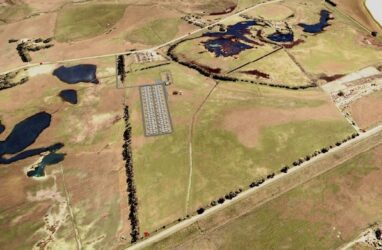
These approvals mark a significant acceleration in large-scale energy storage deployment, using modular construction methods that minimise environmental impact and reduce installation time.
Expert Reaction
"This is a massive step forward for energy storage infrastructure in Australia," said Dr. Emily Carter, senior energy analyst at the Australian Renewable Energy Agency (ARENA). "The robot-ready, concrete-free design cuts construction time by up to 40% and eliminates the carbon footprint of traditional concrete foundations."
Professor James Liu, infrastructure expert at the University of Melbourne, added: "We're seeing a paradigm shift. The ability to deploy battery systems with autonomous robotics means faster grid integration, lower costs, and less disruption to sensitive ecosystems."
Background
The EPBC Act is Australia's key national environmental law, governing projects that may impact matters of national environmental significance. Large battery facilities often require lengthy assessments due to land clearing and construction impacts.
The newly approved projects include a 200 MW battery standalone and a 150 MW solar hybrid battery that uses advanced prefabricated, concrete-free mounting systems. The hybrid will be built using robotic assembly lines, allowing installation without heavy machinery or extensive earthworks.
Project Details
- Project 1: 200 MW standalone battery with 400 MWh storage capacity, located in western Victoria.
- Project 2: 150 MW solar hybrid battery (300 MWh), featuring robotic installation and zero concrete footings, located in New South Wales.
The solar hybrid design uses steel ground-screw anchors instead of concrete, reducing both material costs and site rehabilitation timelines. The robots can place panels and battery modules 24/7, accelerating construction to under six months.

What This Means
These approvals signal a regulatory shift towards embracing innovative, low-impact renewable energy technologies. The fast-tracked EPBC clearance suggests government willingness to accelerate grid decarbonisation while protecting biodiversity.
Industry observers expect the concrete-free, robot-ready model to become a template for future projects. This approach dramatically reduces embodied carbon in construction, lowers project risks, and could unlock sites previously deemed too sensitive for development.
Australia's energy transition depends heavily on storage to balance solar and wind output. These projects, once online, will help stabilise the grid and reduce reliance on fossil fuel peaking plants.
Looking Forward
Similar solar hybrid proposals are already in pre-approval stages for Queensland and South Australia. If the robotic construction proves cost-effective, widespread adoption could slash battery deployment costs by 20-30% within five years.
The approvals also reinforce Australia's position as a testbed for next-generation energy infrastructure. With the EPBC now setting a precedent, investors are expected to accelerate funding for comparable technologies.